The Civilian Life of Radar: How a Wartime Tech Conquered Peacetime
Born in WWII, radar quietly spread into air traffic, weather, shipping, cars, and even modern games. The 80-year civilian story of a military invention.
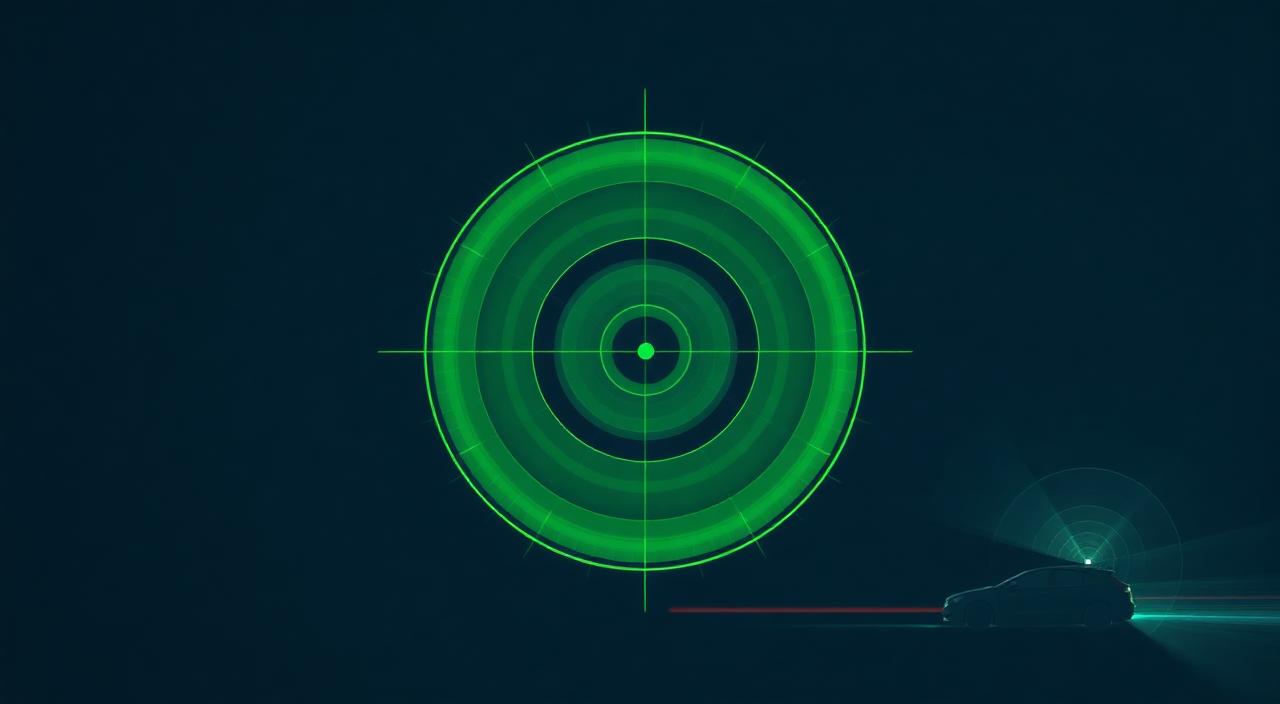
WWII ended in Europe in May 1945. At Britain's Bawdsey Manor radar station, engineers wondered what to do with a tech that had just won the war. The answer unfolded over 80 years: radar stopped being a weapon and became the substrate of aviation, meteorology, shipping, policing, automobiles, and yes — game design.
This piece tells how. The circular sweep you see on a Signal Pitch screen is the aesthetic legacy of a real historical object — more than a design choice, a cultural icon.
1945–1955: civilian aviation radar is born
Civil aviation exploded after the war. Several hundred thousand passengers a year in 1939 became 50 million by 1955. Visual flight rules could not keep up. The fix was at hand: turn the military radar civilian.
In 1946 the US CAA opened the first civilian radar control tower in Indianapolis. After the 1956 Grand Canyon mid-air collision (128 dead) radar-controlled traffic became mandatory in the US. By the 1960s every major airport in the world had it. Modern ATC uses two radars in tandem:
- PSR (Primary Surveillance Radar): classic reflection — position only.
- SSR (Secondary Surveillance Radar): the plane's transponder answers actively — identity, altitude, speed.
1948–1970: weather radar transforms forecasting
During the war Atlantic radar operators noticed strange "ghost" returns: not aircraft — raindrops. After the war that "interference" became meteorology's new instrument. In 1948 the US Weather Bureau built the first network; in 1957 the WSR-57 went nationwide — the "weather radar" loop on US TV came from this system.
In the 1980s Doppler radar entered civilian meteorology. Classic radar measures whether the echo is there; Doppler measures the frequency shift — the speed and direction of motion. Tornado warnings averaged 3 minutes lead time in 1980; today it's 13 minutes, thanks to Doppler.
In 1990 the US NEXRAD network came online: 160 Doppler radars covering the country. It's the spine of modern forecasting.
1947–today: marine radar
The Titanic sank in 1912 because it saw the iceberg too late. Radar was 30 years away then, but Titanic became the social memory of needing it. In 1947 the IMO recommended radar on passenger ships; in the 1980s it became mandatory. Modern ships carry two — long-range S-band, short-range X-band. The classic circular sweep still owns the visual grammar in this sector.
1954: police radar and the birth of speed enforcement
Bryce K. Brown patented a radar gun in 1947; Ohio police adopted it in 1954. That was the Doppler effect entering daily life — your car's speed is read from the frequency shift of a returned signal. Every speed camera on Earth runs the same physics.
1960–today: medical imaging and ultrasound
Ultrasound isn't technically radar — it's sound, not EM — but the principle is identical: send, listen, compute. The first medical units were built in Glasgow in 1956, modeled on military sonar (which is radar's underwater cousin). When a doctor sees a baby on screen today, the visual logic is the same one a 1940 Bawdsey radar operator used: ping, echo, density map.
1995–today: GPS and satellite radar
GPS isn't strictly radar but works on the same idea: satellite emits a signal, receiver computes distance from timing. Civilian GPS went fully operational in 1995. Space-based radar (SAR — Synthetic Aperture Radar) is a different discipline: ESA's Sentinel satellites map Earth in continuous radar imagery for agriculture, earthquake analysis, climate.
2010–today: automotive radar and autonomous cars
Modern cars rely on small mmWave radars for adaptive cruise control, blind-spot warning, automatic emergency braking. Tesla, Volvo, Mercedes — radar is in all of them. The advantage over lidar and cameras: works in rain, fog, darkness.
The cultural legacy: screen and sweep
Radar's real legacy may be visual rather than technical. The PPI display — circular screen, rotating green sweep, phosphor blips — was developed in 1944 for the US Navy. That visual language became a core part of an entire culture's "high-tech" aesthetic code.
- Cinema: Dr. Strangelove (1964), War Games (1983), Hunt for Red October (1990) — radar screens as iconic.
- TV: Star Trek bridge displays, the X-Files title sequence — all PPI descendants.
- Games: Missile Command (1980), Defender (1981), Asteroids' minimap.
- Modern UI: Apple Watch radar pulse, smart-home scan animations, "searching for GPS" indicators.
Signal Pitch: radar reflected into game design
Signal Pitch's visual identity is designed as a radar surface. Circular sweep, light reflections, neon green-blue tones — all owe to this 80-year visual lineage. But it's not decorative: the mechanic mimics radar logic.
- Every "pass" sends a signal; the player reads its success from the echo.
- "Network pressure" is visualized in a Doppler-like topology.
- MIRACLE moments resemble a radar "lock" — the instant signals align.
- Names like "carrier wave", "harmonic lock", "resonance spike" come from the radar lexicon — because the philosophy is a game-mechanic translation of this discipline.
Closing: the peaceful life of a wartime invention
Radar today is quietly part of the world's infrastructure. Every flight, every forecast, every ship voyage, every speed warning, every autonomous brake, every satellite image — all extensions of an 80-year-old wartime discovery. Its peacetime lifespan dwarfs its military one.
The Bawdsey antennas are in museums now, but the visual grammar of that screen — circular sweep, returned blip, green phosphor — is culturally alive. Signal Pitch's radar surface is one attempt to turn that cultural memory into a mechanic. A dot goes out, an echo returns, a decision is made. Eighty years later, radar's essence is the same.